
blog
With AI hunting bugs, seL4 is suddenly being courted
Now that AI is finding kernel bugs faster than ever, some governments and research labs are weighing a move to seL4, a microkernel with a mathematical proof that it does what its specification says and nothing more. That makes sense for isolating the parts that can’t be allowed to fail. But it isn’t an overnight switch, and this fall brought attacks that seL4 wouldn’t have stopped.
This fall’s flood of machine-found bugs
If you run Linux nodes, you’ve felt it in the updates. Between July and September, the kernel published 4,585 CVEs, more than three times as many as in the same quarter of 2025. Since 2024 the kernel has assigned a CVE to almost every fix, so the number counts fixes rather than attacks, but both quarters are counted the same way.
Greg Kroah-Hartman, who maintains the stable kernels, told Kernel Recipes in September that the kernel now fixes about 33 CVEs a day. LWN, which covered the talk, chalks that up to the arrival of AI models. Not everything that comes in is useful, though. Of the 79 reports attributed to Mythos, Anthropic’s model, only about ten led to a fix, he said in the same talk.
In April, Anthropic reported that Mythos Preview had found kernel bugs that can be triggered remotely, but that Linux’s defenses had kept it from exploiting any of them. It did get to root by chaining local bugs. In November, OpenAI said its GPT-6 Cyber had written root exploits for 948 distinct Linux bugs. Those are the companies’ own numbers.
Xen, a widely used hypervisor, didn’t escape either. Its 3 November advisory, XSA-523, says a malicious virtual machine could read and write other VMs’ memory, including that of the domain that manages the host. Anthropic found the bug with Claude.
The documented attacks by swarms of agents have gone after applications. In July, about 700 agents OpenAI was testing attacked Hugging Face to cheat on a benchmark. Between late August and early September, hundreds of agents directed by a criminal broke into PaperCut servers at 395 organizations. On 16 November, Google said it had seen attackers fully automate finding and exploiting bugs.
Who’s weighing the move
The NCSC, the UK’s cybersecurity agency, has been involved with seL4 since 2016. It worked with a vendor to build an seL4-based device, and thousands are now deployed across government departments. At the seL4 Summit in September, it pointed to “numerous cases of AI escaping sandboxes thought secure” and asked whether seL4-based systems should enforce that isolation.
In October, ARIA, the UK’s advanced research agency, put more than £3.2 million into Agentic-seL4, a three-university project to contain AI agents on top of seL4. Germany’s Fraunhofer AISEC had already joined the seL4 Foundation, on the grounds that agentic AI keeps making it easier to find and exploit vulnerabilities. In Switzerland, a startup called Neutrality is building a sovereign cloud platform for Europe on top of seL4.
Proofcraft, the company founded by people who led the seL4 proof, is swamped with inquiries from companies that want their software verified. It told WIRED that neither it nor its competitors can keep up. In Europe, the draft standard that applies the Cyber Resilience Act to operating systems already accepts a formal proof as a way to meet one of its requirements.
On Hacker News, some people say it outright. In a July thread about 432 kernel CVEs published in under 32 hours, one commenter wrote: “LLMs gave that one last push: Linux is not sustainable. We need to start looking at seL4 as the base, instead.”
Ten thousand proven lines
seL4 is a microkernel. Only the essentials run in privileged mode; drivers, file systems and the network stack run as ordinary programs, so if one fails, the rest carry on. The verified kernel is about 10,000 lines on RISC-V. Linux has more than 31 million.
In 2009, a team at NICTA in Sydney finished a machine-checked proof that the kernel’s C code “behaves precisely as specified in the seL4 specification and nothing more.” That rules out buffer overflows and null pointer dereferences. Writing the kernel took 2.2 person-years, and proving it about 20.
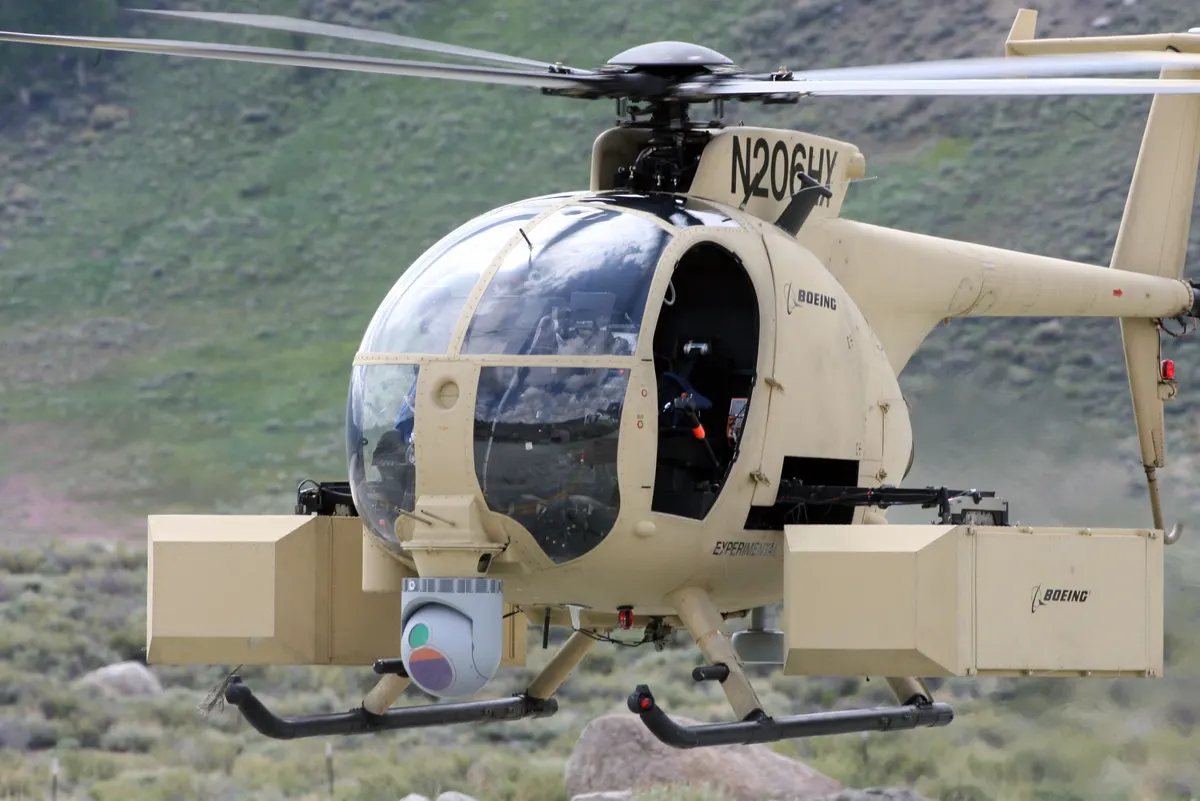
In DARPA’s HACMS program, Boeing put seL4 on the mission computer of an Unmanned Little Bird, a helicopter that can fly without a pilot, with Linux in a separate partition. The red team got root on that partition, the source code, the documentation and six weeks. It couldn’t break out or disrupt the aircraft.

Release 17.0.0, out on 30 October, focused on reviewing the code the proof doesn’t cover. It fixes 17 security issues and thanks Anthropic for reporting a number of them, without saying which ones or how they were found. The two most serious ones crash the kernel: one can be triggered by any thread on x86, the other by a virtual machine on Arm. The release notes say none of them touches what the proof guarantees: they’re in unverified configurations or in what the project assumes without proof. On its website, the project adds that no functional correctness defect has turned up in verified code since 2009.
Switching isn’t like changing distros
seL4 is only the foundation of an operating system. It has no files, processes or sockets, and you build what goes on top yourself, with tools like Microkit or LionsOS, which is still “undergoing active research and development.” One catch with Microkit: it always uses the kernel’s MCS variant, the one meant for real-time work. That variant is proven only on RISC-V, and only since June; on Arm or x86, a system built with Microkit runs an unverified kernel. seL4’s multicore version isn’t verified either.
You can also run Linux on top, in a virtual machine. It’s contained, but it keeps every bug it had. As far as is publicly known, nobody runs pods or containers on seL4 in production; Kata doesn’t even list it among its hypervisors.
Proving your own code is the expensive part, and that’s where AI helps. A system presented at OSDI 2026, built around a small fine-tuned model, proves up to 77.6% of the theorems in an seL4 benchmark on its own. Anthropic and Theorem expect verification to become as practical as fuzzing is today. Proofcraft warns that someone still has to check what exactly was proven, so a generated proof doesn’t create unjustified trust.
And it’s still a niche. The Foundation has 23 members, between 20 and 24 every year since 2021. The only consumer product known to run it is a car, NIO’s ONVO L60. Gernot Heiser, who chairs the Foundation’s board, admitted in a 2025 talk that fifteen years after the first proof there was still no provably secure OS, and that seL4 was difficult to deploy.
What it wouldn’t have stopped
On the night of 11 October, someone got into the refrigeration controllers of about 700 supermarkets and other food stores in France and set the defrost cycles to high temperatures. According to CERT-FR, a lot of stock was lost and at least 15 fires broke out. France blames a unit of Iran’s Revolutionary Guards; Iran denies it. The second wave, on the night of 1 November, reached about 40 Delhaize stores in Belgium, a butcher shop near Antwerp that had to throw out about €15,000 worth of meat, and shops in Sweden, the Netherlands and elsewhere. Nobody knows yet who was behind that one.


As far as anyone knows, no kernel bug was needed. The management panels, from Danfoss and Copeland, were exposed to the internet and many were out of support. Danfoss told the Dutch broadcaster NOS that the victims there were still using the default password. Once in, the defrost function the equipment ships with was all it took. According to the UK’s NCSC, advanced AI probably wouldn’t have been needed. A proven kernel would have carried out that command just as faithfully. The project says so itself in its FAQ: “An OS kernel, verified or not, does not automatically make a system secure.”
According to Verizon’s 2026 DBIR, 31% of breaches begin with an exploited vulnerability, many of them in web applications and VPNs. Nearly three in ten begin with phishing or stolen credentials. In September, Google tallied about 5,000 Linux kernel CVEs published between January and August, and it hadn’t seen a single one exploited as a zero-day in real attacks.
What you can take to your cluster
Your pods share the node’s kernel. GKE’s documentation notes that a flaw in it or in the container runtime can let a process break out of its container. For code you don’t trust, like the code an AI agent writes and runs, Kubernetes has RuntimeClass. With gVisor, the pod talks to its own kernel written in Go; with Kata, it runs inside a lightweight virtual machine. Neither is proven and both cost some performance, but they put one more boundary between that code and the node’s kernel.
To see which pods already have a RuntimeClass, run this. Pods that show <none> use the node’s default runtime.
kubectl get pods -A -o custom-columns=NAMESPACE:.metadata.namespace,POD:.metadata.name,RUNTIME:.spec.runtimeClassName
The other thing worth copying from seL4 is how it hands out authority. Each component gets only what it needs, and whoever granted it can take it back. Mark Miller put it in 2006 as “the right amount of authority just-in-time, not excess authority just-in-case.” In Kubernetes, that means ServiceAccounts with only the verbs they actually use, and permissions that expire. In kubelatch, for instance, a permission expires after 30 days unless you pick another date, and a privileged one like cluster-admin can’t last more than 8 hours.
Start with that RuntimeClass list. Pods that run code from an AI agent or from your customers are the first candidates for gVisor or Kata.
Picaporte Labs is one person, in Spain. If you see something that doesn’t match what’s in front of you, write to me.